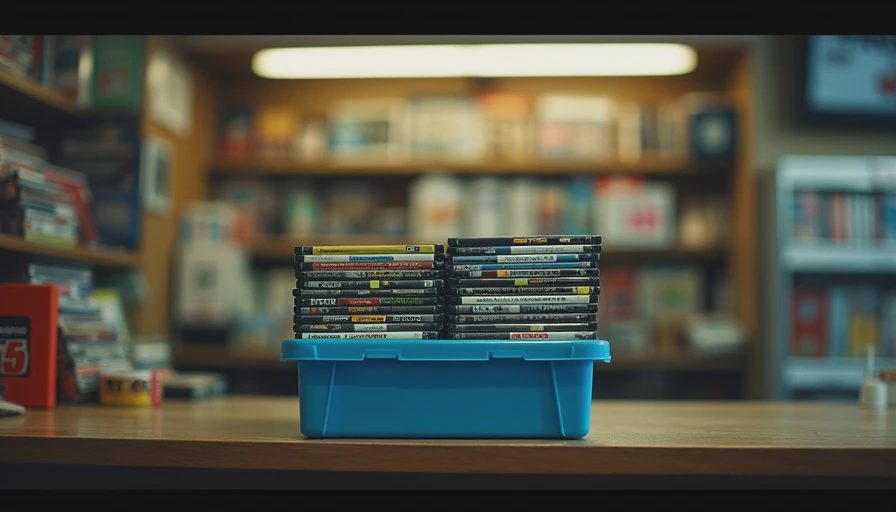
I used to find games by standing in front of a bin.
Not a curated shelf. Not a “players also liked” row. A literal bin—plastic, sometimes scratched, filled with cases that had already lived one or two lives. The prices were low enough that a bad choice did not feel like a disaster. The selection was limited enough that you had to look closely. And the whole process required you to be physically present, sorting through other people’s discards with no algorithm trying to predict what you would finish.
I did not know it then, but those bins were doing a kind of recommendation work that most modern systems still struggle to match.
The Value of Friction
Algorithms are designed to reduce friction. They learn what you have already liked and offer more of the same shape. They optimize for the probability that you will click, play, or at least not immediately bounce. The result is often a smooth, narrow corridor of suggestions that feel safe because they resemble your history.
The used game bin operated on the opposite principle. It introduced friction on purpose. You had to pick up cases, read the backs, judge condition, and decide whether the risk was worth a few dollars. Because the inventory was whatever had been traded in that week, the suggestions were not tailored to your taste. They were simply available. That randomness forced a different kind of attention. You looked at games you would never have searched for. You considered genres you thought you had outgrown. You sometimes left with something that made no sense on paper and turned out to be exactly what the next month needed.
Friction, in that small setting, was not a flaw. It was the mechanism that made discovery possible.
Incomplete Information as a Feature
Modern recommendation engines thrive on data. Playtime, completion rates, tags, reviews, social signals. The more the system knows, the more confidently it can steer you.
The bin offered almost none of that. A case might have a cracked jewel tray. The manual might be missing. The price sticker from a previous store might still be attached. You had the cover art, a short description, and whatever memory or rumor you brought with you. That incompleteness changed the decision. You were not choosing the optimally rated experience. You were choosing a possibility. The gap between what the case promised and what the disc delivered became part of the pleasure. Sometimes the game was worse than you hoped. Sometimes it was stranger and better. Either way, the encounter felt earned because you had accepted the uncertainty in advance.
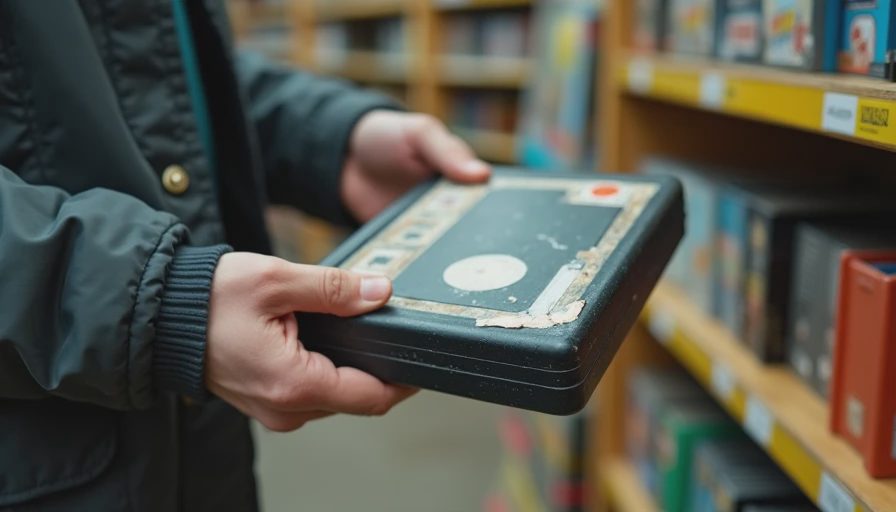
Algorithms try to close that gap before you begin. The bin left it open.
The Social Life of Discarded Objects
Every game in that bin had already been someone else’s. It had been bought, played, finished or abandoned, and finally released. That history sat quietly inside the transaction. You were not the first person to care about this title, and you would not be the last. The object carried a faint sense of continuation.
I still think about certain games I only encountered because they were sitting in a stack of pre-owned cases on a weekday afternoon. No trailer campaign had reached me. No friend had insisted. The bin had simply made them visible at the moment I was willing to look. That kind of accidental timing is difficult for an algorithm to replicate, because algorithms are built to follow patterns rather than interrupt them.
What We Traded Away
I am not arguing that used bins were morally superior or that streaming libraries are empty of surprise. Convenience has real value, especially when time is limited and attention is already fragmented. Being able to search a catalog and find a specific title in seconds is a genuine improvement.
What disappeared for many of us was the low-stakes, physically grounded practice of browsing without a goal. The bin did not care about engagement metrics. It did not try to keep you inside a single franchise or tone. It only offered what was present, at a price that made curiosity affordable. In doing so, it occasionally placed something unexpected in your hands and trusted you to decide what to do with it.
That trust is harder to find when every surface is optimizing for the next click.

The Habit That Remains
I still look for used games when I travel or when a local shop has a bin near the counter. The selection is smaller than it used to be. The prices are sometimes less forgiving. But the basic act—standing there, turning cases over, accepting that I might leave with something I cannot fully justify—still feels like a modest corrective to the way most recommendations now arrive.
Memory is one thing. Replay is another.
The old bins did not know me. That was their advantage. They could not narrow the field to what I already resembled. They could only show me what other people had finished with, and leave the rest of the decision to whatever curiosity I had left at the end of the day. Sometimes that was enough to change the next few weeks. Sometimes it was only a temporary companion. Either way, the encounter felt less like being managed and more like being free to choose poorly, or surprisingly well, on my own.


No feedback yet — submit the first.