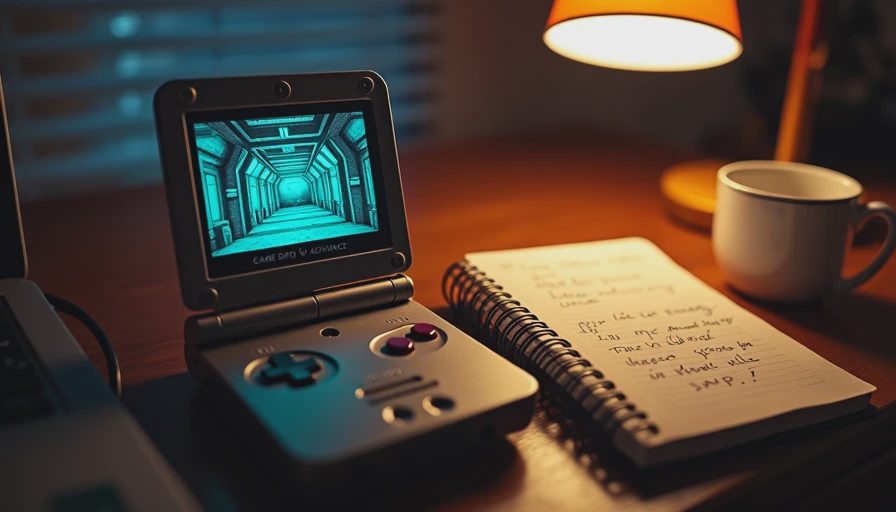
I bounced off Metroid Fusion the first time I tried it.
It was years ago. I came to it after the open, lonely sprawl of Super Metroid and expected something similar. Instead I found a more directed path, a constant voice in my ear, and a version of Samus who felt restricted and watched. The tension was there, but so was a sense that the game was leading me by the hand. I put it down and told myself I would return when I was in the right mood. That mood took longer to arrive than I expected.
This time I finished it.
What I Resisted Before
The linearity was the main obstacle. Fusion tells you where to go with unusual clarity. Navigation rooms and the presence of Adam create a structure that feels closer to a guided mission than the free-form exploration many players associate with the series. Doors stay locked until the story is ready for them to open. The map is segmented. Sequence breaking is limited by design.
As a younger player who valued the feeling of being lost in a large, indifferent world, that direction felt like a loss. I kept waiting for the game to open up the way I thought a Metroid game should. When it continued to point the way forward, I mistook focus for limitation.
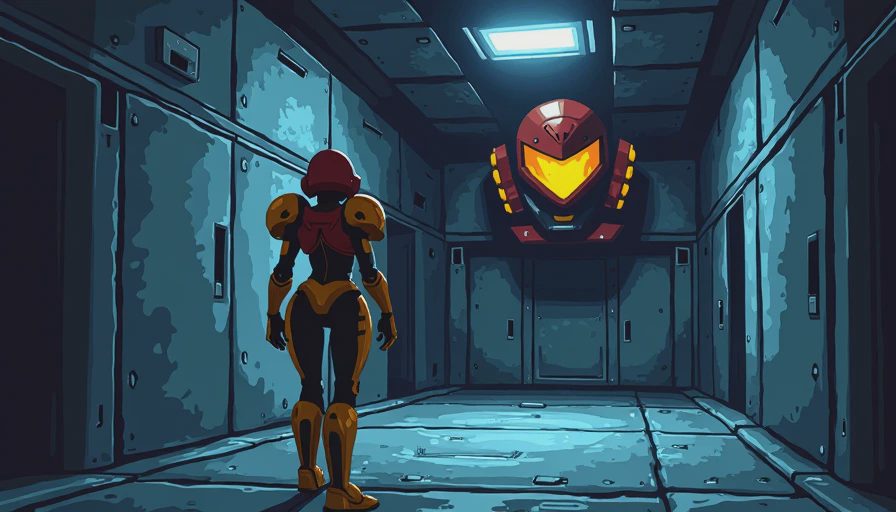
The tone contributed too. Fusion is colder and more anxious than some of its siblings. The SA-X exists as a persistent threat rather than a distant legend. Samus is vulnerable in a way the series had not emphasized as strongly before. The atmosphere is excellent, but it is also relentless. I was not always ready to sit with that feeling for long stretches.
What Changed on the Return
Coming back as an adult shifted the frame. I no longer needed the game to recreate the exact shape of earlier entries. I could take Fusion on its own terms.
The directed structure now feels intentional rather than restrictive. By limiting where you can go and when, the game maintains a steady sense of pressure. The SA-X encounters land harder because you cannot simply disappear into an unexplored corner of the map. The station feels like a place that is actively hostile, not merely large. The guidance from Adam, once annoying, now reads as part of the narrative tension—an authority that is helpful, controlling, and not entirely trustworthy.
The level design within each sector remains strong. Even when the overall path is linear, the individual areas still reward careful movement, observation, and the creative use of new abilities. The controls are tight and responsive. Gaining power still feels meaningful because the game has made you feel the lack of it so clearly.
The atmosphere holds up completely. The color palette, the environmental storytelling, the way the station deteriorates as you progress—all of it still creates a coherent, uneasy mood. Fusion understands how to make a handheld screen feel claustrophobic and watched.
What Remains True
The game is still more guided than the classic free-exploration ideal. If that freedom is the main reason you love the series, Fusion will continue to feel like a compromise. The backtracking required for full item collection can also feel less elegant than in more open entries, because the structure was not primarily built for that style of play.
None of this made the replay a failure. It simply clarified the kind of experience the game is offering. Fusion is not trying to be a portable Super Metroid. It is trying to be a tense, focused, slightly paranoid mission with a clear dramatic arc. On that front it succeeds.
The Value of Returning
Finishing Metroid Fusion did not erase my earlier resistance. It explained it. I had wanted the game to give me a different kind of freedom than it was designed to provide. When I stopped asking it to be something else, the strengths became easier to see: the sustained tension, the careful pacing of power gains, the way the station itself becomes a character, and the quiet effectiveness of a story told mostly through environment and implication.
There is a particular satisfaction in returning to a game you once set aside and discovering that the problem was partly one of timing and expectation. Fusion was always a well-made, distinctive entry. I simply needed to meet it without demanding it recreate a feeling it was never trying to deliver.
Memory is one thing. Replay is another.
I am glad I went back. The SA-X still raises the hair on the back of my neck. The moment new abilities finally open a path that had been closed still carries weight. And the station, for all its direction, still feels like a place that does not want you there.
If you left Metroid Fusion years ago because it felt too linear or too guided, it may be worth another look with different expectations. It will not become a different game. But it might become the game it always was, once you stop asking it to be the one you originally wanted.


No feedback yet — submit the first.