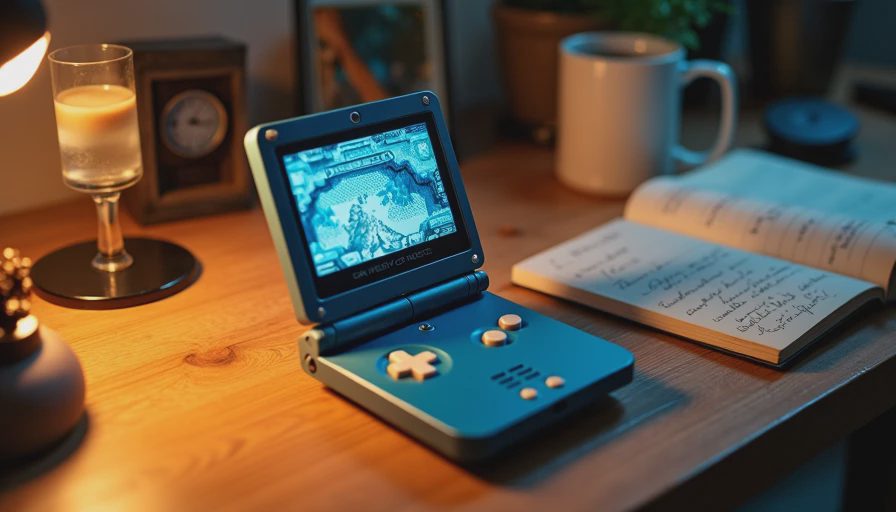
I came back to Final Fantasy Tactics Advance on a night when I wanted the comfort of a grid and the quiet satisfaction of watching job classes unlock. I had not played it properly in years. What I remembered was the bright palette, the clan of mismatched recruits, and the strange little rules that governed every fight. What I was less sure about was whether the game still worked once the nostalgia thinned.
Memory is one thing. Replay is another.
What Still Works
The job system remains the strongest reason to return. Building a clan, watching characters move between classes, and slowly assembling a flexible group of specialists still feels rewarding. The sense of progression is steady and tangible. New abilities open new approaches. A unit that once felt limited can suddenly become central. That loop of experimentation and payoff has not gone stale.
The world has a consistent charm. Ivalice here is softer and more storybook than the darker version many players met first, but the tone is intentional. The towns, the varied races, the sense of a portable fantasy that a group of kids might actually dream up—all of it still coheres. The pixel art is clean and expressive on a small screen. The music supports the mood without demanding attention. It is a world that feels good to spend time inside.
Combat itself, when the Laws cooperate, still offers the classic pleasure of positioning, timing, and ability synergy. Watching a well-prepared turn resolve across the grid retains its quiet satisfaction. For players who enjoy tactical RPGs that emphasize customization over punishing difficulty, the core loop still delivers.
Where Familiarity Does the Heavy Lifting
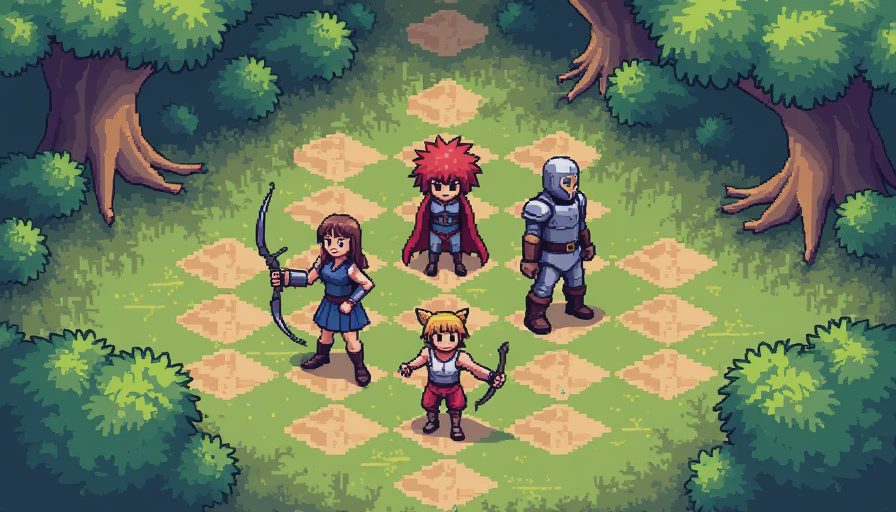
The Law system is the clearest example of something that has aged into mixed territory. On paper it is clever: each battle carries restrictions that force you to adapt, ban certain weapons or spells, and think beyond your usual strategy. In practice it can feel arbitrary. You will occasionally watch a carefully built plan collapse because the day’s rules made a basic action illegal. Yellow cards and prison sentences interrupt the flow more often than they deepen it. What once felt like a novel constraint now often feels like friction that the rest of the design has to work around.
The story is gentle and relatively simple. It leans into themes of escapism and the difficulty of leaving a comforting fantasy behind. Those ideas still have weight, especially if you first played the game when you were closer in age to its protagonists. As an adult, the emotional register feels lighter and more straightforward than the systems around it. The narrative does not dig as hard as the job system does.
There is also a fair amount of clan management and dispatch work that sits between the more interesting missions. Some of it adds texture. Some of it simply extends the runtime. Modern tactical games tend to respect the player’s time more tightly. Tactics Advance was designed in an era that assumed you would live with the game for a while.
The Gap Between Then and Now
As a younger player I mostly felt the wonder of the job system and the comfort of a colorful portable world. The Laws were an oddity I learned to work around rather than a feature I celebrated. Replaying it now, I can separate the parts that still generate genuine fun from the parts that mainly trigger recognition.
The fun is real. Customizing a clan and watching it become capable still scratches a specific itch. The familiarity is also real. Some of the pleasure comes from returning to a structure I already know how to inhabit. The game does not reinvent itself for a 2026 audience. It offers the same systems, the same pacing, and the same occasional frustrations it always did. Whether that is enough depends on what you are looking for.
Who Should Still Play This in 2026
Play it if:
You enjoy deep job systems and the long-term project of building a versatile tactical squad.
You like colorful, lower-stakes fantasy settings more than grim political intrigue.
You are willing to work around (or even enjoy) the Law system’s constraints.
You want a self-contained GBA-era tactics experience that still has charm and mechanical depth.
You can probably skip it if:
You found the Law system frustrating the first time and do not expect that feeling to change.
You prefer tighter pacing and fewer management layers between the good battles.
You want a story with sharper edges or more complex moral weight.
You already have stronger tactical RPGs in your rotation and are only chasing nostalgia.
The game is available through official re-releases and digital collections, making it easy to revisit without hunting down original hardware. The experience remains largely the same as it was on the GBA—both for better and for worse.
I finished my latest run with the same mixed feeling I have come to expect from certain old favorites. The job system still pulled me forward. The Laws still occasionally made me sigh. The world still felt like a place I once wanted to stay inside longer than I should have.
Final Fantasy Tactics Advance is still fun when the systems click. It is also, in places, mostly familiar. Both things can be true. The question is which one you need more on a given evening.
Memory kept the soft colors and the satisfaction of a new job unlocking. Replay showed me the parts that still earn their keep and the parts that mainly remind me I used to have more patience for arbitrary rules. I still like the game. I just no longer mistake recognition for pure enjoyment.
That’s the verdict from one adult in Ann Arbor who still builds small clans in his head when the week has been too long.





No feedback yet — submit the first.