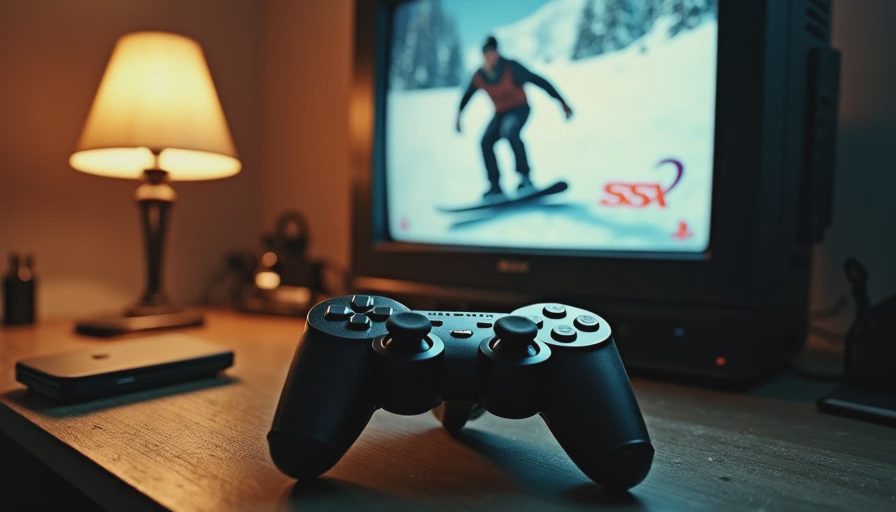
I still remember the first time I booted up SSX 3 on my PS2. It was 2003, I was maybe thirteen, and I had no idea what I was getting into. I'd played the original SSX and Tricky—loved them both—but this one felt different from the start. The menus were gone. The mountain was one continuous thing. You just picked a character and went.
Twenty-three years later, I'm back on that mountain. And I'm asking the question I ask about every classic I revisit: does it still hold up in 2026?
The short answer is yes. But let me explain why.
The Mountain That Changed Everything
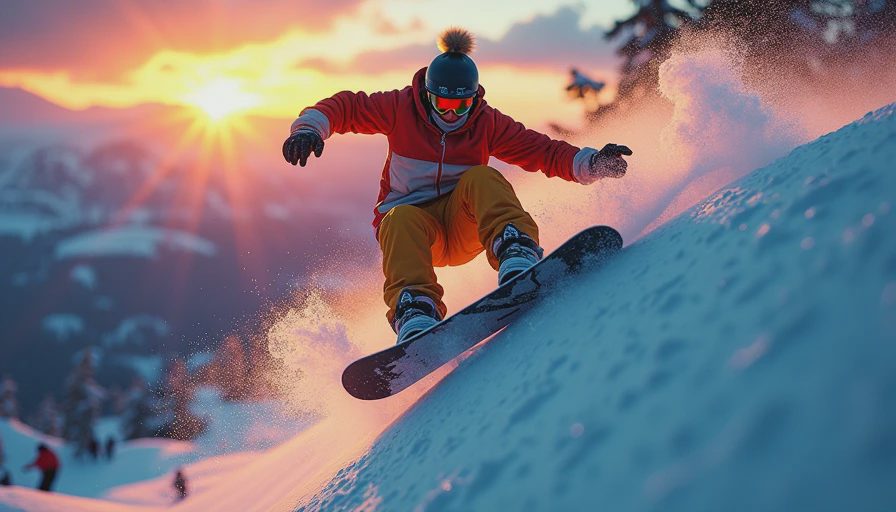
Here's what made SSX 3 special in 2003, and what still makes it special now: the whole game takes place on one mountain. Three peaks. Dozens of runs. No loading screens between them. You can start at the top of Peak 3 and ride all the way to the bottom of Peak 1 without a single pause.
That doesn't sound revolutionary in 2026. Open worlds are everywhere. But in 2003? It was genuinely mind-blowing. And the best part is, it still feels seamless today. One player described it as "a continuous mountain where play rarely pauses, only transforms". You're never taken out of the flow. You're never staring at a loading bar. You're just... riding.
And that's the whole point of a pick-up-and-play game, isn't it? No friction. No waiting. Just you, the mountain, and whatever run you feel like taking.

The Controls: A Mirror Shine
The biggest risk with any old sports game is the controls. If they feel clunky or unresponsive, the whole thing falls apart.
SSX 3 passes this test with flying colours. The controls have been described as "iterated on to a mirror shine"—tight, responsive, and easy to pick up. You can learn the basics in minutes: hold a direction, hit a jump, press a button for a trick. But mastery takes hours. The game has "mechanically dense & full of freedom of expression" depth that rewards players who stick with it.
One player in 2026 called the gameplay "incredibly smooth". Another said it "holds up massively even to this day". And a third put it simply: SSX 3 is "absolutely breezy to pick up blindly in current year".
That's the hallmark of a true pick-up-and-play classic. You don't need to relearn anything. Your muscle memory from 2003 still works.
The Soundtrack That Listens to You
I need to talk about the music, because SSX 3 does something I've never seen another game do.
The soundtrack adapts to your performance. When you're in the air, the bass drops out. When you land, it comes back in. Different sections of each song are remixed with different instrumentation depending on how well you're doing. It's subtle enough that you might not notice it consciously, but you feel it. The music rises and falls with your run. It's reactive in a way that feels almost alive.
And then there's DJ Atomika, the in-universe radio host who introduces every event, gives weather updates, and cracks jokes as you snowboard up to each run. One writer called his writing "genuinely commended for feeling effortlessly cool throughout". He never gets old. He makes the mountain feel like a real place.
The Visuals: Better Than the Reboot
Here's something I didn't expect: SSX 3 looks better than the 2012 reboot.
I'm serious. The reboot went for a gritty, realistic aesthetic—"very grey textureless mush," as one player put it. SSX 3, by contrast, is vibrant, stylised, and full of personality. Each section of the mountain has its own visual identity. The lighting and skybox change subtly as you descend. It's a game that understands that style ages better than realism.
With resolution unlocked on emulators, the game "holds up nicely" and runs at a locked 60fps. But even on original hardware, the art direction carries it. One reviewer called it "a really stylized graphical presentation that still feels modern". Another said it's "striking... how much better this game looks over the next-gen reboot".
The Honest Verdict
So, does SSX 3 still hold up as a pick-up-and-play classic?
Yes. Unequivocally yes.
The controls are tight. The mountain is seamless. The music reacts to you. The visuals have aged beautifully. And the core loop—pick a character, pick a run, go—is as satisfying now as it was in 2003.
Who should play SSX 3 in 2026:
Anyone who loved the original SSX or Tricky and wants to see where the series peaked
Players looking for a game they can play in fifteen-minute bursts or three-hour sessions
People who miss the era when extreme sports games were allowed to be fun instead of realistic
Anyone who wants to experience what one player called "one of the greatest games of all time"
Who should probably skip it:
Players who can't tolerate early-2000s character design and voice acting
Anyone who prefers realistic snowboarding simulations over arcade-style tricks
People who need modern online multiplayer or constant content updates
Here's the honest truth: SSX 3 in 2026 isn't just a good retro game. It's a better game than most things being released today. It understands something that modern sports games have forgotten: that fun doesn't require realism, and that a good game doesn't need to be complicated to be deep.
Twenty-three years later, I'm still finding new paths on that mountain. Still chasing better times. Still smiling when I pull off a perfect uber trick.
Some games are worth replaying. SSX 3 is worth living in.
Memory is one thing. Replay is another. And replaying SSX 3 reminded me that some classics don't just hold up—they still set the standard.




No feedback yet — submit the first.