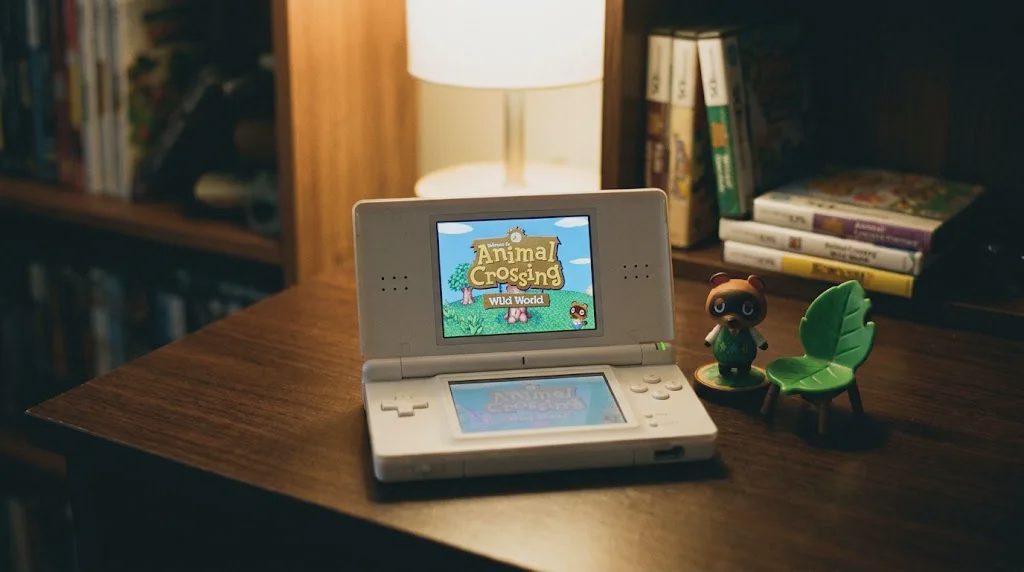
I still remember the first time I booted up Animal Crossing: Wild World on my DS. It was 2006, I was maybe eleven, and I had no idea what I was getting into. I'd never played the GameCube original. I just saw a cartridge with a cute raccoon on it and thought, why not?
What followed was months of daily visits to a tiny virtual town. I'd wake up, check my mailbox, shake some trees, talk to my animal neighbours, and slowly pay off my ever-growing mortgage to Tom Nook. It was aimless. It was repetitive. And I absolutely loved it.
Fast forward to 2026. I'm 31, living in Ann Arbor, and I haven't touched Wild World in maybe fifteen years. But I keep thinking about it. That soft, slightly melancholic soundtrack. The way the seasons changed in real time. The feeling of coming home to a town that remembered me.
So I dug out my old DS, blew the dust off the cartridge, and loaded up my save file.
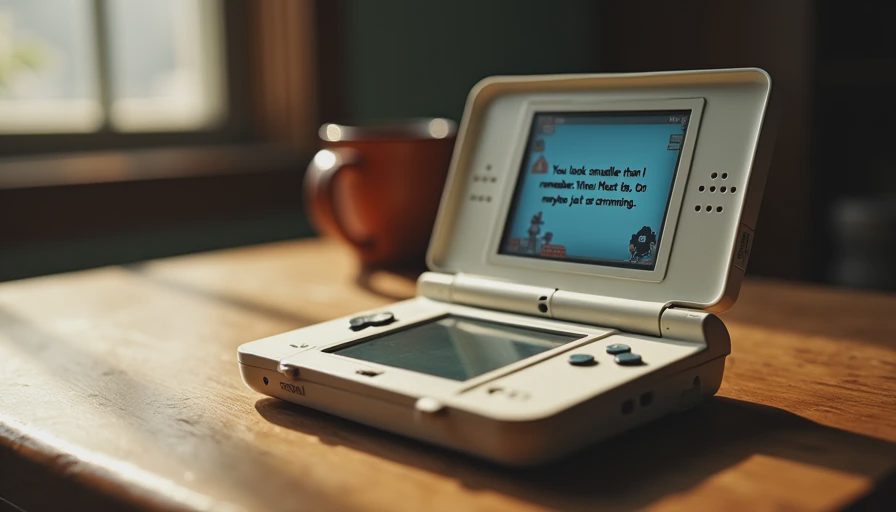
The weeds were everywhere. My villagers were gone—moved away years ago, replaced by strangers I didn't recognise. My house was still there, but it felt smaller than I remembered. And the frame rate? Let's just say it takes some getting used to.
Wild World is twenty years old now. It sold over eleven million copies and became the ninth best-selling game on the DS. For many people my age, it was Animal Crossing. But the question I'm here to answer is simple: does it still hold up in 2026?
What Still Works
The villagers are actually interesting.
This is the thing everyone comes back to, and for good reason. In Wild World, villagers have personalities—and not always nice ones. Cranky villagers will actually be cranky with you. Snooty ones will condescend. You have to earn their friendship; it doesn't come for free. One player described it as villagers having "so much emotion and complexity" that later entries just don't replicate.
Compare that to New Horizons, where everyone is relentlessly nice to the point of being a bit boring. Wild World feels more alive because the people in it feel more real. They get annoyed. They have opinions. One reviewer in 2026 called the dialogue "snappy" and said it makes Wild World the series' peak.
The atmosphere is unmatched.
There's something about the way Wild World looks and sounds that later games just can't replicate. The pixel art has a warmth to it. The music—that gentle, lo-fi soundtrack—still hits in a way that makes you want to sit back and do nothing for a while. One player called it "immensely comforting," praising its "wabi sabi art direction".
And the little details? Celeste runs her own observatory in the museum attic, where you can create custom constellations and watch them appear in the night sky. You can sit in The Roost every Saturday night and listen to K.K. Slider play an acoustic set—no prerequisites, no star ratings, just a quiet moment. Dr. Shrunk, a travelling axolotl comedian, teaches you emotions. These aren't features you unlock; they're just there, waiting for you to discover them.
It's a game about letting go.
This sounds strange, but hear me out. Later Animal Crossing games give you enormous control. In New Horizons, you terraform islands, place furniture outside, and curate every square inch of your world. In Wild World, you can't do any of that. You can't stop a villager from moving away. You can't redesign the town layout. You can't even control where new villagers place their houses—they might crush your garden and there's nothing you can do about it.
But that lack of control is liberating. You're not the mayor. You're not the Resident Representative. You're just some random person who moved into a town full of animals. The game doesn't ask you to build anything perfect. It just asks you to show up. One writer put it well: "Small progress matters more" in Wild World. A new piece of furniture feels like an achievement. A flower you bred yourself feels special. The limitations make the small victories meaningful.
What Doesn't
There's not much to do.
This is the big one. Once you've played for a few hours, you realise the gameplay loop is pretty thin. You shake trees. You catch bugs and fish. You talk to villagers. You buy furniture. You pay off your loan. Repeat.
One reviewer in 2026 called it "good, but once you've played for a few hours you realize there isn't that much to do". Another said they'd "immediately grow tired of doing the same thing every day". Compared to the sheer volume of activities in later entries—from diving to crafting to terraforming—Wild World can feel barren.
The technical limitations are rough.
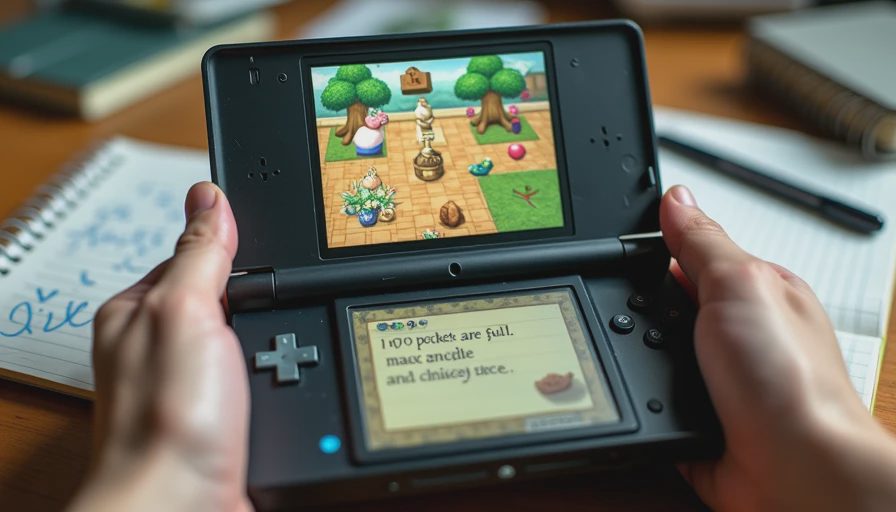
Wild World runs at around 20 frames per second. On a modern screen, it looks choppy. The graphics are blocky—"every animal is made up of four or fewer pixels," as one player put it. The inventory is tiny, and items don't stack. You'll spend a lot of time running back and forth to your house just to free up space.
And then there's the grass deterioration. If you run around your town too much, the grass disappears and turns into dirt paths. It's a charming quirk in theory, but in practice it means your town gradually turns into a muddy mess unless you walk everywhere at a snail's pace.
The repetition is real.
Villager dialogue may seem charming at first, but past a certain point the same conversations start repeating. The daily routine—checking the shop, shaking trees, pulling weeds—becomes exactly that: a routine. One reviewer called it "mind-numbing repetition". Another pointed out that weeds build up over time, and if you've abandoned your town for years, "it would take a while to pluck them out".
Wild World was designed to be played in short bursts, day after day. But in 2026, with so many other games competing for our attention, that daily commitment can feel more like a chore than a pleasure.
The Honest Verdict
So where does that leave us?
If you're looking for a game with deep mechanics, endless activities, and modern polish—Wild World is going to disappoint you. It's limited. It's repetitive. It runs at 20fps and looks like it was made in 2005, because it was.
But if you're looking for something else—something slower, quieter, more intimate—Wild World still has a magic that later games lost. The villagers feel like real neighbours. The world feels like it exists whether you're there or not. The simplicity isn't a flaw; it's a feature. One player in 2026 put it beautifully: it has "a charm that is irreplicable compared to the newer games".
Who should play Animal Crossing: Wild World in 2026:
Anyone who played it as a kid and wants to revisit that specific, irreplaceable feeling
Players who prefer character-driven games over systems-driven ones
People who want a slow game—something to check in on for fifteen minutes a day, not hours at a time
Fans curious about where the series came from and what made it special
Who should probably skip it:
Players accustomed to the depth and polish of New Leaf or New Horizons
Anyone who needs clear goals, progression systems, or constant novelty
People who can't tolerate low frame rates, tiny inventories, or repetitive dialogue
Here's the honest truth: Animal Crossing: Wild World in 2026 is a game I still love, but not a game I can wholeheartedly recommend to everyone. It's a time capsule—a snapshot of a simpler era before Animal Crossing became a cultural phenomenon, before terraforming and customisation and endless content updates.
It's a game that asks you to slow down. To accept imperfection. To show up, day after day, for no other reason than because you want to see what your neighbours are up to.
And sometimes, that's exactly what I need.
Memory is one thing. Replay is another. And replaying Wild World reminded me that some things don't need to be bigger, faster, or more complicated to be worth your time. Sometimes a small, quiet town is exactly enough.
No feedback yet — submit the first.