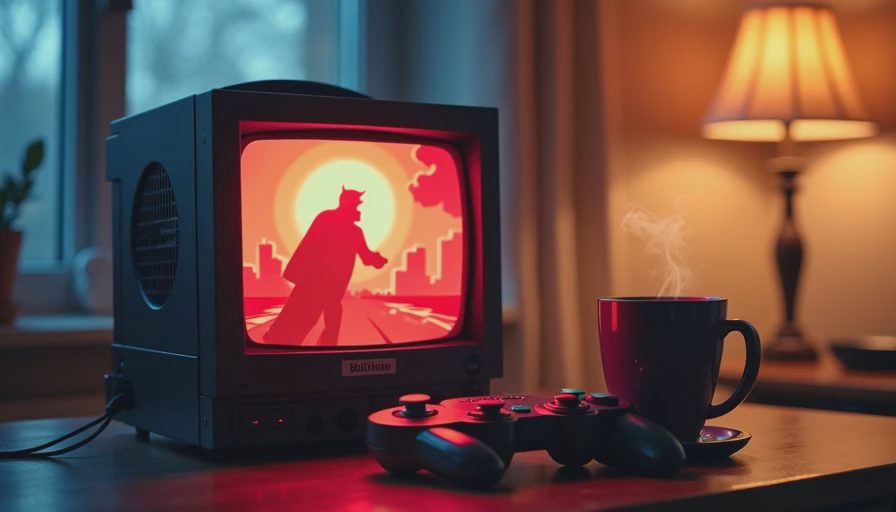
I came back to Viewtiful Joe on a night when I wanted something that still felt like it had been made by people who were excited about the medium. The GameCube era produced plenty of experiments. Few of them looked or moved quite like this one.
I remembered the cel-shaded comic-book energy, the “Henshin-a-go-go!” transformation, and the way time itself became a weapon. What I was less sure about was whether the game underneath the style still rewarded the hours it asked for.
Memory is one thing. Replay is another.
What Still Feels Alive
The core idea remains excellent. Joe’s VFX powers—Slow, Mach Speed, and Zoom In—are not just visual flourishes. They change the rules of every encounter. Slowing time lets you read attacks and set up longer combos. Speeding up creates momentum and solves certain environmental puzzles. Zooming in amplifies damage and turns ordinary hits into spectacle. Learning to switch between these states fluidly is still satisfying in a way few action games match.
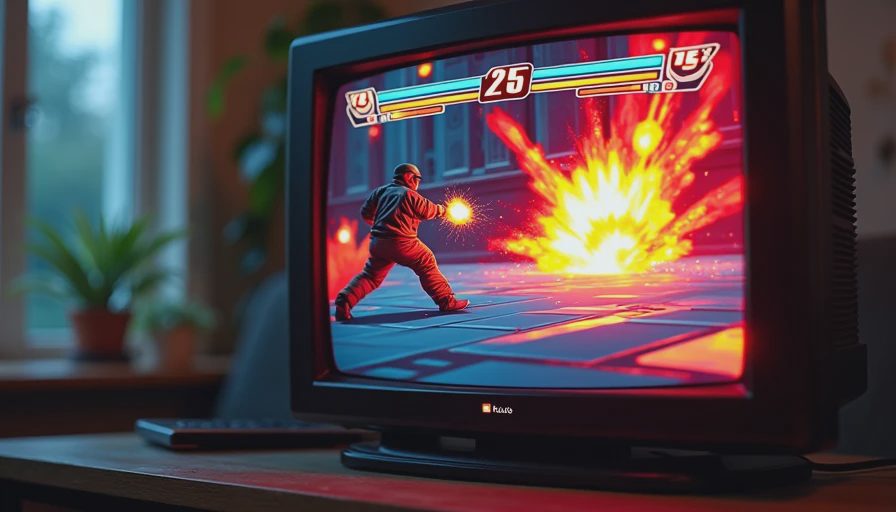
The presentation has not lost its charge. The thick black outlines, the exaggerated poses, the sense that every frame is trying to look like a panel from a hyperactive comic—it all still works. The humor is broad and occasionally dated, yet the commitment to the bit is consistent. The game knows it is ridiculous and leans all the way in.
Level design, at its best, supports the powers rather than merely decorating them. Enemies and bosses are built around the need to manipulate time and perspective. When the systems click, you feel clever rather than simply fast. That sensation of mastery is still available to anyone willing to practice.
Where the Style Has to Carry Extra Weight
The difficulty is the main filter. Viewtiful Joe is demanding in a precise, sometimes stubborn way. Checkpoints can feel sparse. Certain boss patterns require repetition until the rhythm is automatic. On higher settings the game becomes a test of execution more than exploration. For players who enjoy that kind of focused challenge, the struggle is part of the appeal. For everyone else it can turn the stylish surface into a barrier.
Some of the platforming and puzzle segments have aged less gracefully than the combat. The camera and the 2.5D perspective occasionally make spatial judgment harder than it needs to be. A few solutions feel more obscure than elegant. These moments do not define the game, but they interrupt the flow in ways that modern design would likely smooth over.
The campaign is short by contemporary standards. That brevity is mostly a virtue—the game rarely overstays its ideas—but it also means the experience is dense. There is less room to coast. You are either engaged with the systems or you are repeating a section until you are.
The Gap Between Icon and Experience
It is easy to remember Viewtiful Joe primarily as a style icon. The look is distinctive enough to survive as a reference even for people who never finished it. Replay shows that the style was always in service of a specific kind of play. The comic-book aesthetic is not decoration layered on top of a standard brawler. It is the logic of the combat and the camera and the power system made visible.
That said, the style does more work now than it did in 2003. The mechanical language of stylish action has expanded in the years since. Games have borrowed the attitude, the slow-motion flair, the emphasis on performance. Viewtiful Joe still feels like itself, but it no longer feels like the only game speaking this dialect. What remains unique is the particular combination of time manipulation, zoom-ins, and comic exaggeration—the way the systems and the presentation refuse to separate.
Who Should Still Play This in 2026
It is still worth your time if:
You enjoy precise, high-skill action that rewards learning patterns and managing multiple layered systems.
You respond to strong audiovisual identity and do not mind a game that announces its personality loudly.
You are willing to accept a steep challenge curve and occasional frustration in exchange for moments of real mastery.
You want a short, dense campaign rather than a long, sprawling one.
It may be mostly a style icon for you if:
You prefer more forgiving difficulty or robust checkpointing.
You want the aesthetic without the demand for tight execution.
You have limited patience for repetition while learning boss patterns.
You are mainly curious about the look and can satisfy that curiosity with videos or a short sample.
The original GameCube version remains the purest presentation. Later ports exist and make the game easier to access, though some players still prefer the feel of the first release. Either way, the experience has not been fundamentally altered by time.
I finished my latest run with the same mixture of admiration and mild exhaustion the game has always produced. The transformation sequence still gives a small charge. Landing a clean string of slowed, zoomed-in hits still feels like performing rather than merely succeeding. The difficulty still asks more than many players will want to give.
Viewtiful Joe is more than a style icon. The systems underneath the comic-book surface are coherent, inventive, and still capable of delivering a specific kind of satisfaction. It is also a game that refuses to meet you halfway. The style gets you in the door. The rest of the experience decides whether you stay.
Memory kept the attitude and the color. Replay confirmed that the attitude was always attached to a demanding, tightly wound piece of design. For the right player, that combination is still worth the time. For others, the icon may be enough. Both responses are reasonable. The game has always been clear about what it is asking.


No feedback yet — submit the first.