The best rpgs on snes occupy a strange place in my memory. I remember their music before I remember their maps, and I remember being certain they were enormous when I was still measuring game time in school nights. Coming back now, with work tomorrow and less patience for random battles, is a different test. Some games remain astonishing. Others are lovely historical objects that I would rather remember than replay. Memory is one thing. Replay is another.
Why the SNES remains such a good RPG machine
The Super Nintendo had limitations that often worked in its favor. Its pixel art could suggest a village, forest, or haunted ruin without filling every corner with noise. Menus were usually simple. Music had to establish mood with a small number of memorable sounds, so a town theme could stay in your head for twenty years. The hardware also encouraged designers to build around clear ideas rather than endless systems.
That clarity is a major reason rpgs on snes can still feel approachable. You are rarely asked to learn twelve currencies, three crafting trees, and a glossary before the adventure begins. A few minutes with a controller usually tells you what matters: explore, talk to people, improve the party, and keep moving. For an adult player, that directness has real value. A game can be deep without demanding that it become your second job.
The tradeoff is that old design often hides its instructions. Important items can sit in an ordinary-looking room. A character may offer one vague sentence that somehow contains the solution to the next hour. Save points can be inconvenient, and some games expect you to take notes. The charm is real, but so is the friction.
The essential starting points
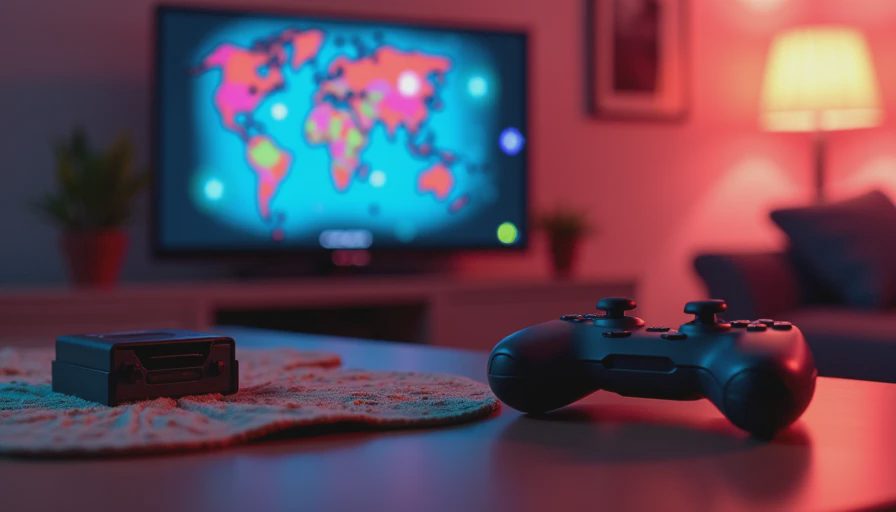
If you have limited time, start with Super Mario RPG. It is shorter, funny, welcoming, and unusually good at teaching its battle system without making the tutorial feel like a lecture. Its timed button inputs add a little involvement to otherwise simple combat, while the colorful world still has enough personality to reward a relaxed weekend replay. It is not the deepest game here, but it may be the easiest to recommend.
Final Fantasy VI is the grander choice. Its large cast, shifting structure, and dramatic scenes still create an impressive sense of scale. The opening hours are especially strong, and the soundtrack remains one of the clearest arguments for revisiting rpgs on snes with headphones. The second half is less tightly paced, but it gives the player freedom rather than simply repeating the first act. Expect roughly 25 to 35 hours for a focused playthrough, longer if you explore.
Chrono Trigger is the safest all-purpose recommendation. Battles move quickly, random encounters are absent, and the time-travel structure gives each location a satisfying connection to the next. It is polished in ways that many contemporaries are not. The story is emotionally broad rather than especially subtle, yet its momentum is excellent. When an adult replay has only a few evenings available, Chrono Trigger wastes remarkably little of them.
The games that reward patience
EarthBound is not a conventional fantasy quest, and that is precisely why it remains distinctive. Its suburban setting, odd humor, uncomfortable moments, and ordinary-looking enemies still produce a tone no other 16-bit RPG quite matches. The inventory system can be irritating, and the final stretch becomes more abstract than the earlier adventure suggests. Still, EarthBound understands the lonely, funny feeling of being young in a world that does not explain itself.
Secret of Mana is more appealing as a shared memory than as a flawless solo game. Its real-time combat, bright environments, and cooperative design make it easy to imagine three friends gathered around one television. Alone, the fighting can feel blunt, and the computer-controlled companions are not always sensible. The unevenness is part of its identity, but it means modern players should approach it for atmosphere and companionship rather than mechanical precision.
For something stranger, try SaGa 3? No, the better-known Western choice is Final Fantasy Mystic Quest, a compact RPG built for beginners. It lacks the ambition of the major releases, but its straightforward structure can be refreshing after a long day. It is not among the deepest rpgs on snes, and I would not place it above the classics, yet it shows how useful a simple adventure can be when you want progress without homework.
Where nostalgia needs a reality check
Some celebrated games are harder to revisit than their reputation suggests. Illusion of Gaia has beautiful ideas and a memorable mood, but its action combat and uneven storytelling do not always carry the weight placed on them by memory. The same goes for Secret of Evermore, which has a strong atmosphere and an appealing alchemy system but can feel lonely and repetitive beside its more famous peers.
The original Dragon Quest and early Final Fantasy releases are historically important, but modern players should not confuse influence with comfort. Their pacing is slower, their interfaces are less forgiving, and grinding can become part of the expected route. They are worthwhile if you want to understand the foundations of the genre. They are not automatically the best first rpgs on snes for someone who wants a smooth weekend replay.
This is not an argument against old design. It is an argument for choosing the right kind of old design. A slow game can be satisfying when its atmosphere earns the time. A difficult game can work when its rules are readable. The question is not whether a classic is sacred. The question is what it asks from you now.
How to play these games today
You do not need an expensive collection to experience the strongest rpgs on snes. Official re-releases and collections are the cleanest option when available, especially if they include suspend saves, display settings, and multiple language or regional versions. A legitimate digital release is also more practical than paying collector prices for a cartridge whose label has faded and whose battery may be unreliable.
If you use original hardware, a basic cleaning kit, a comfortable controller, and a dependable television setup matter more than rare accessories. Save often when the game allows it. Keep a notebook nearby for passwords, clues, and party plans. That small habit turns opaque design into a manageable part of the experience instead of a reason to search for a walkthrough every ten minutes.
The biggest modern advantage is pacing. You can play for forty minutes, suspend the game, and return without losing the evening. That makes longer adventures such as Final Fantasy VI more realistic for working adults. It also helps expose which games have genuine momentum and which ones depended on a child’s willingness to wander for hours.
My replay order for a busy adult
I would begin with Super Mario RPG, continue with Chrono Trigger, and then choose between Final Fantasy VI and EarthBound depending on mood. The first gives immediate charm, the second gives effortless momentum, the third offers scale, and the fourth offers a voice unlike anything else. After that, Secret of Mana makes sense with another player, while the more demanding releases belong on a slower backlog.
That order matters because rpgs on snes are not interchangeable nostalgia capsules. One is a brisk comedy, another is a time-spanning adventure, another is a sprawling ensemble drama. Treating them as one giant list misses what makes each replay valuable. The right choice depends on whether you want comfort, discovery, atmosphere, or a story large enough to occupy a month.
Final verdict
The strongest rpgs on snes still deserve time, but not all of them deserve equal time. Chrono Trigger is the best place to begin, Final Fantasy VI is the richest long-form commitment, Super Mario RPG is the easiest recommendation, and EarthBound remains the most singular. Those are the games I would put in front of a friend who has limited evenings and wants more than a museum visit.
Play the rest when curiosity pulls you there, not because a ranking says you owe them reverence. What I loved then is not always what works now, and that is fine. The best old games survive by meeting the adult player halfway: they bring the music, the color, and the remembered feeling, while asking for less patience than memory promised. That is why rpgs on snes remain worth revisiting.



No feedback yet — submit the first.