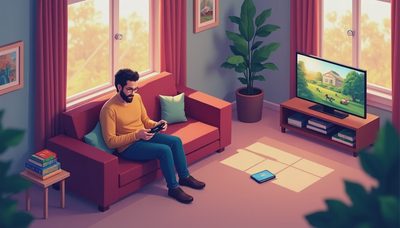
The best gamecube games of all time are easy to praise from a distance. I can still remember the purple console under the television, the satisfying clack of a disc case, and the particular confidence of believing every weekend had enough hours. Coming back as an adult is different. A game now has to earn an evening after work, not merely trigger a memory. This is a list of the GameCube releases that still make a convincing case for themselves, along with the ones whose reputation needs a little editing.
What makes a GameCube classic last?
A great GameCube game usually had a clean idea and the confidence to build around it. Nintendo's hardware was not the strongest machine of its generation, but it produced games with unusually clear identities. Super Mario Sunshine wanted movement to feel playful. Metroid Prime wanted exploration to feel lonely and deliberate. Mario Kart: Double Dash!! wanted racing to become a small argument between two people on one couch.
That clarity matters more now than graphical polish. Some games on this list are visually dated, and a few have menus or camera systems that require patience. The important question is whether the friction serves something memorable. Memory is one thing. Replay is another. I ranked these games by how rewarding they feel today, not by how loudly nostalgia speaks.
Super Mario Sunshine remains the complicated favorite. Isle Delfino is bright, musical, and full of places that invite wandering, while the water pack gives Mario a movement system unlike any other mainline entry. The blue coins, awkward camera, and uneven mission design are real problems. Still, when Sunshine works, it feels like playing inside a summer postcard. It is not the most polished Mario game, but it has a personality that newer platformers often sand away.
The essential adventures
The Legend of Zelda: The Wind Waker is perhaps the easiest recommendation for a modern player with limited time. Its expressive animation has aged beautifully, and sailing between islands gives the world a gentle rhythm. The late-game Triforce hunt slows the journey, but the charm survives the interruption. It is a warm, funny adventure with an emotional ending, and its stylized art refuses to become obsolete.
Metroid Prime is more demanding but arguably more complete. Its visor scanning, backtracking, and environmental storytelling ask for attention rather than constant reaction. The opening hours can feel slow if you expect a shooter to hurry, yet that slowness creates the atmosphere. Tallon IV feels like a place instead of a sequence of levels. The first-person perspective also makes every door, elevator, and ruined laboratory feel strangely personal.
Paper Mario: The Thousand-Year Door still has the best conversational rhythm in the series. Its turn-based battles are approachable but reward timing, badges, and a little planning. The writing is playful without requiring a glossary, and each chapter introduces a distinct setting and mechanical twist. Some jokes and errands show their age, but the game understands that an adventure needs downtime. It is a remarkably comfortable companion for a long weekend.
Resident Evil 4 changed action games, and the reason is still visible in every tense encounter. The over-the-shoulder camera, deliberate aiming, and constant pressure make even a familiar village feel dangerous. Its later chapters become more bombastic than frightening, and the inventory screen can feel like a second job, but the pacing remains impressive. The GameCube version is historically important; modern ports are usually more convenient, though the original presentation has its own atmosphere.
The games that deserve more credit
Pikmin 2 may be the strongest recommendation for an adult player who wants something distinctive without a seventy-hour commitment. You command small creatures, gather objects, and manage risk in compact stages. The caves can become stressful, particularly when hazards eliminate Pikmin permanently, but that tension gives ordinary tasks meaning. It is part strategy game, part nature walk, and part quiet lesson in accepting that a plan can go wrong.
F-Zero GX is the opposite kind of experience. It is fast, technical, and occasionally rude about your mistakes. The controls are precise, but the tracks demand practice that many adults no longer have time to give. Even so, a short session can be satisfying because improvement is easy to feel. This is one of the best gamecube games of all time for a player who wants a focused challenge rather than a relaxing nostalgia trip.
Eternal Darkness: Sanity's Requiem deserves attention for its tone and ambition. Its period settings, unsettling audio, and unreliable presentation create a kind of psychological horror that does not depend on constant jump scares. Some combat encounters are clumsy, and the structure can feel repetitive, but its experiments with the player's expectations remain memorable. It is best approached with minimal spoilers and a willingness to let the game be strange.
Multiplayer memories that still work
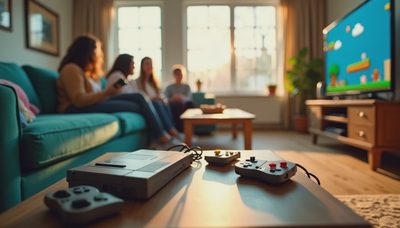
Mario Kart: Double Dash!! is not the deepest racer in the series, but it may be the most immediately social. Two characters sharing one kart creates useful cooperation and predictable arguments. One person steers while the other manages items, which means even a less experienced player has a job. The roster and track selection are smaller than newer entries, yet a few races can still turn a quiet evening into a noisy one.
Super Smash Bros. Melee remains brilliant for competitive players, although its speed and technical depth can be intimidating. For casual groups, the important feature is not tournament mastery but how quickly everyone understands the basic pleasure: choose a favorite character, knock friends off the screen, and rematch immediately. Melee has fewer modern conveniences, but its responsive controls make the absence of them easier to forgive.
The Simpsons: Hit & Run is less refined than its memory suggests, but it earns its place through atmosphere. Springfield feels like a small animated playground, and the writing captures the show's early comic energy. Driving missions repeat their ideas, and the camera occasionally fights back. Still, the combination of recognizable locations, sharp dialogue, and simple exploration makes it an enjoyable short replay rather than a masterpiece that needs defending.
A practical shortlist for limited time
If you have only a few evenings, start with The Wind Waker, Metroid Prime, or Resident Evil 4. Each offers a strong central experience without demanding that you understand every corner of the library. Choose Super Mario Sunshine if movement and bright exploration sound appealing. Choose Pikmin 2 if you would rather make decisions than chase collectibles. Choose Double Dash!! when another person is sitting nearby and the point is conversation as much as competition.
The best gamecube games of all time do not all need to be replayed from start to finish. A few hours with F-Zero GX can be enough. A single chapter of Paper Mario can remind you why its tone worked. Even browsing the menus of an old game can reveal what your memory kept and what it politely removed. Adult gaming is partly the art of choosing a satisfying stopping point.
My final recommendation is to begin with the game you remember most vividly, then give yourself permission to disagree with your younger self. Super Mario Sunshine may still be your favorite, even with its rough edges. You may discover that Metroid Prime is the one that truly matured with you. The best gamecube games of all time are not sacred objects; they are invitations to spend a few present-day hours with an older version of yourself. What I loved then is not always what works now, but the right replay can make both versions of you feel understood.
No feedback yet — submit the first.